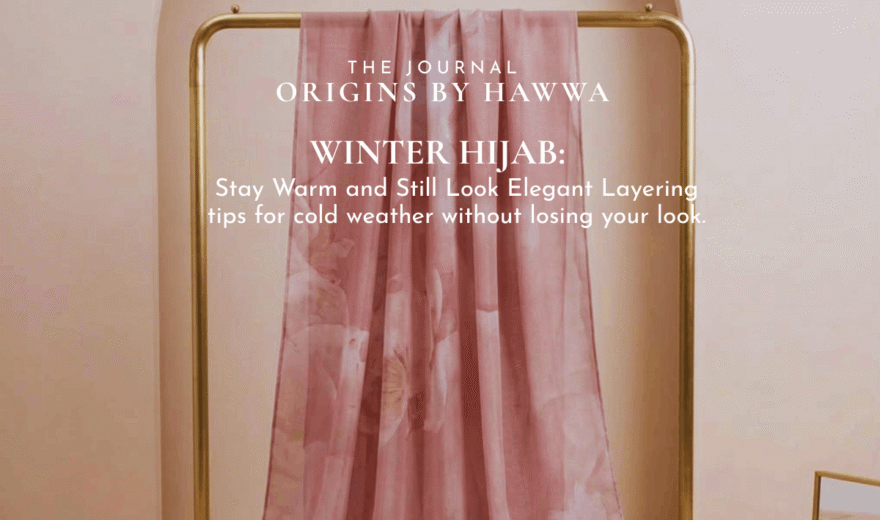
For winter hijab wearing, layer with a fitted under cap to retain heat. Choose jersey fabric for its windbreak properties. Wear a coat with a wider neck opening that accommodates your style. Wool and knit scarves can layer over a lighter hijab for extra warmth.
Winter creates a real styling problem that summer doesn’t: you need warmth, but you can’t just pile on fabric without losing the shape and drape you’ve built your style around. A winter hijab that works well balances both. This guide covers exactly how to layer for warmth without your style collapsing under the weight of it.
Building a winter hijab that actually holds heat
Heat escapes fastest from your head and neck, which makes the base layer of a winter hijab more important than the outer layer. A fitted under cap traps warm air close to the scalp before you add your main hijab over the top. This single layer makes a bigger difference to warmth than switching to a heavier outer fabric.
Jersey earns its place in winter for a reason beyond softness. Its tighter knit blocks wind better than looser, more open-weave fabrics. A jersey winter hijab in Charcoal or Midnight Ink gives you both wind resistance and a style that holds its shape through a cold commute.
Your coat matters just as much as your hijab. A coat with a narrow, high neckline fights against hijab fabric and pushes it out of place. Look for a wider neck opening that lets your hijab sit naturally rather than getting compressed under a tight collar.
The layering logic behind real cold-weather warmth
Warmth comes from trapped air, not fabric thickness alone. This is why layering two thinner pieces often keeps you warmer than one thick one each layer traps its own pocket of warm air, and the layers work together rather than one piece doing all the work.
A lighter modal hijab as your base, with a wool or knit scarf wrapped over the top for outdoor stretches, follows this same principle. You get modal’s comfort against your skin and wool’s insulation on the outer layer, and you can remove the scarf indoors without redoing your whole style.
Islamic teaching doesn’t specify particular winter styling requirements. What matters is maintaining the same standard of covering, adapted sensibly to the season your body actually needs to survive.
Putting a winter hijab together for real cold
Start with a fitted under cap in a neutral shade — it sits invisibly under any outer layer and does most of the heat-retention work. Add a jersey winter hijab for its wind resistance and shape retention through a full day outdoors. Our jersey collection covers shades that work well for this base layer.
For genuinely cold days, wrap a wool or knit scarf loosely over your hijab for outdoor stretches, then remove it once you’re inside. This avoids overheating indoors while still giving you real warmth outside. Check your coat’s neckline before winter fully sets in a wider opening now saves you constant readjustment once the cold arrives.
Common questions about winter hijab styling
What’s the warmest fabric for a winter hijab? Jersey performs well for wind resistance, and pairing it with a fitted under cap adds more warmth than switching to a single thicker fabric. Layering beats bulk for real cold-weather performance.
Does a winter hijab need a completely different style? Not necessarily. Most of the adjustment happens in layering underneath and around your usual style, rather than changing the style itself. A fitted under cap and the right coat neckline solve most winter problems.
How do I stop my winter hijab from getting compressed under a coat? Check your coat’s neckline first. A high, narrow collar pushes hijab fabric out of place. A wider neck opening lets your style sit as intended, even with several layers underneath.