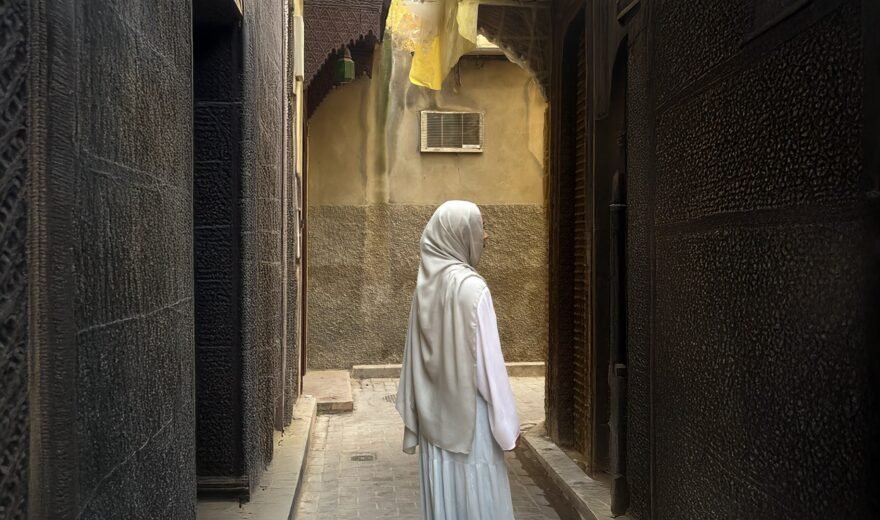
Wash jersey hijabs on a 30 degree cycle or a cool hand wash. Skip the tumble dryer entirely. Reshape the fabric while it’s still damp. Dry it flat or over a hanger. When you store it, roll it rather than folding it tightly sharp folds leave permanent creases in jersey over time.
That’s the short version. Jersey has earned its reputation as the easiest hijab fabric to wear. It stretches with you, and it needs no pinning for most styles. But that same stretch makes it easy to damage if you treat it like a cotton t-shirt. Jersey is knitted, not woven, and knitted fabric holds its shape through tension in the fibres rather than a fixed weave. Heat, friction, and rough handling all loosen that tension permanently. A stretched-out jersey hijab won’t spring back. This guide covers exactly how to wash, dry, and store your jersey pieces so they keep their shape for years, not months. If you’re deciding between fabrics in the first place, our modal vs jersey comparison breaks down which suits your routine.
The core answer: wash cool, skip the softener
Jersey is almost always a cotton-viscose, cotton-modal, or cotton-elastane blend. Check the fibre content on the label it should guide your wash temperature more than habit does. As a rule, keep the water at 30 degrees or below. Hot water relaxes the elastane fibres that give jersey its stretch. That’s why a hijab that once hugged your head snugly can end up loose and gaping after a few warm washes.
Hand washing is gentler still. It’s worth the extra few minutes for your everyday-colour pieces a Sage Garden or Midnight Ink jersey hijab you reach for several times a week.
Fill a basin with cool water and add a small amount of mild, colour-safe detergent. Submerge the hijab and gently press the water through the fabric. Avoid rubbing or wringing it. Wringing distorts jersey fast, because it twists the fibres out of their natural alignment.
If you use a machine instead, place the hijab in a mesh laundry bag on a delicate cycle. Wash it with similar-weight fabrics, not heavier items like jeans or towels, which can pull and snag the knit.
Skip fabric softener on jersey. It coats the fibres and reduces the natural moisture-wicking quality that makes jersey comfortable in warm weather or on long days. Instead, add a capful of white vinegar to the rinse water it softens the fabric without the coating.
Why heat is the real enemy
Heat causes most jersey damage, and the tumble dryer is where most jersey hijabs get ruined. Dryer heat does two things at once. It speeds up the same fibre relaxation that hot water causes, and the tumbling motion adds mechanical stress that pulls the knit out of shape even faster than washing alone. Take away one rule from this guide: never tumble dry a jersey hijab, not even on a low or “delicate” setting.
Reshape the hijab while it’s still damp, right after washing this step matters more than people expect. Jersey holds whatever shape it’s in while it dries, so a hijab left crumpled in a laundry basket will dry with those creases baked in.
Lay it flat on a towel and smooth out the fabric with your hands. Let it air dry away from direct sun; UV exposure fades colour and weakens fibres over time, particularly in richer tones like Midnight Ink.
If you prefer to hang it, use a wide, rounded hanger rather than a wire one. A wire hanger concentrates weight on two narrow points and leaves stretch marks at the shoulders of the fabric.
How to store it without creasing
A lot of otherwise well-cared-for jersey pieces lose their shape quietly in storage. Folding a jersey hijab the way you’d fold a scarf in half, then in half again — creates a hard crease exactly where the fabric is knitted to stretch. Over months of repeated folding, that crease can become a permanent thin line or even a weak point.
Rolling is gentler on the knit structure and takes up roughly the same drawer space. Roll from one short end to the other, loosely rather than tightly. Store it standing upright in a drawer or basket, so you can see your colours at a glance.
Putting it into practice
Hand wash after two to three wears rather than after every single wear jersey doesn’t hold odour the way some fabrics do, and overwashing itself causes wear. Keep a small mesh bag by your laundry basket specifically for hijabs, so they never end up loose in a machine load with heavier items.
If a jersey hijab has already stretched slightly out of shape, try a gentle reset. Dampen it lightly with a spray bottle, lay it flat, and ease it back toward its original dimensions before it dries.
This won’t undo months of hot washing, but it can correct minor stretching from a single rough wash.
Store occasion pieces a jersey hijab in a shade like Champagne Mist you save for particular outfits — separately from your daily rotation. This keeps them from being compressed under heavier items, which can leave lasting creases even without washing. Once you’ve built a rotation you trust, covers the pinning side of the equation.
Common questions
Can I iron a jersey hijab? Best avoided. Jersey’s stretch comes from its knit structure, and direct heat from an iron can flatten that structure permanently, leaving the fabric looking papery rather than soft. If a piece needs de-wrinkling, hold a fabric steamer a few inches away instead, or simply re-dampen and reshape the hijab as described above.
Why does my jersey hijab smell different after a few washes? This usually signals detergent build-up, not the fabric itself. Jersey blends can hold onto residue from heavy detergents or fabric softener over repeated washes. Switch to a smaller amount of gentle detergent and add a vinegar rinse every few washes to fix it.
How long should a well-cared-for jersey hijab last? With cool washing, air drying, and rolled storage, expect a good-quality jersey hijab to hold its shape and colour for at least two to three years of regular wear. Most damage that shortens this lifespan comes from heat, not normal daily wear. For general fibre-care guidance beyond jersey specifically, the Woolmark Company’s fabric care resources offer useful background on how heat and agitation affect knitted fibres.